
The Next Frontier in Commercial Property Differentiation
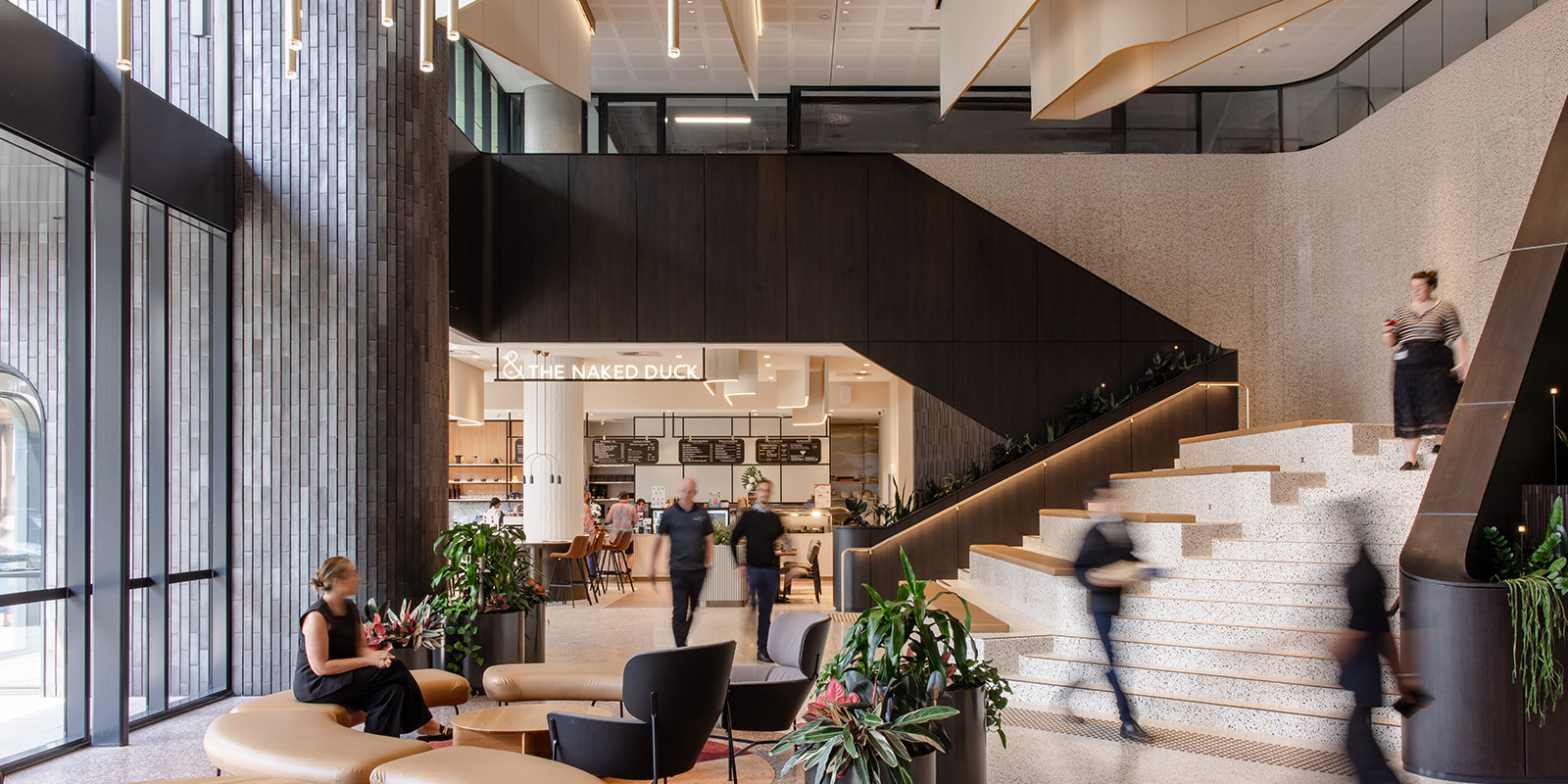
Enter the lobby of a newly completed Sydney office tower or a Melbourne mixed-use precinct, and you’ll notice the details developers have obsessed over: the stone selection in the foyer, the lighting temperature, the acoustic treatment, the way natural light moves through the atrium. What you may not consciously register, but absolutely feel, is the scent.
Across Australia’s commercial property sector, signature scenting has quietly moved from a boutique hospitality indulgence to a core part of how REITs, developers and asset managers differentiate their portfolios. As tenant expectations rise and the line between “office” and “experience” continues to blur, scent has become one of the few sensory tools left that hasn’t been fully explored, until now.
A Trend Reshaping Asset Strategy
The commercial real estate industry has spent the last decade competing on amenity. End-of-trip facilities, wellness floors, curated F&B, biophilic design. These investments have raised the baseline for what tenants expect from premium-grade buildings. But amenity alone is becoming table stakes. Forward-thinking landlords and precinct developers are now asking a sharper question: what does our building feel like, and how do we make that feeling consistent, repeatable and ownable?
Scent answers this in a way few other tools can. It’s the fastest sense to reach the brain’s emotional centre, it bypasses conscious filtering, and unlike a lobby renovation, it can be installed, refined and rolled out across a portfolio with relative speed. For asset owners managing multiple buildings or precincts, a signature scent becomes a piece of brand architecture, every bit as deliberate as wayfinding or a fit-out palette.
This is precisely why we’re seeing some of Australia’s most significant property developments, from net zero towers to heritage-led CBD precincts, treat scent as a strategic decision rather than an afterthought.
What a Signature Scent Actually Does for a Commercial Asset
For decision makers evaluating whether scent strategy belongs in a capital or operating budget, the benefits tend to fall into a few clear categories.
It shapes first impressions before a single word is spoken. A prospective tenant, investor or visitor forms an impression of a building within seconds of entering. A considered fragrance in the lobby and lift landings reinforces the quality cues already built into the architecture and finishes, before anyone has read a brochure or sat through a leasing pitch.
It builds brand recognition across a portfolio. For REITs and developers managing several assets under one banner, a consistent signature scent creates an instantly recognisable thread between properties, much like a logo or colour palette, but one that’s experienced rather than seen.
It supports tenant wellbeing and productivity. Workplace research consistently shows that ambient scent can influence mood, focus and stress levels. For asset owners under pressure to justify office attendance and tenant retention, an environment that feels considered and calming is a genuine point of difference.
It translates into tangible retail. A signature scent developed for a precinct’s common areas can extend into branded candles, room sprays or retail products, giving developers a tenant gifting tool and an additional touchpoint for community building.
It’s measurable and controllable. Unlike a renovation, scent strategy can be diffused precisely where it has the greatest impact, in arrival points, lift lobbies and common thoroughfares, and adjusted as a brand or building identity evolves.
Scent in Action: Australia’s Leading Precincts and Developers
Air Aroma has worked alongside many of Australia’s most ambitious property and workplace developers to translate brand identity into fragrance. A few examples illustrate just how varied, and how deliberate, this work has become.
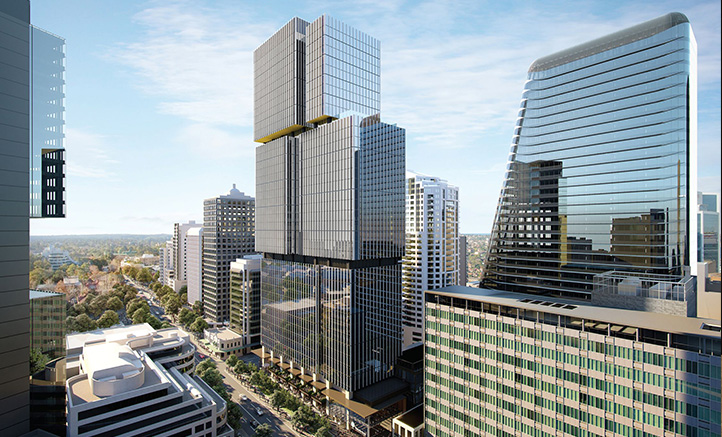
At VicX Tower in North Sydney, a 35-floor net zero carbon building rising above the new Victoria Cross metro station, the signature scent was designed to be fresh and vibrant, echoing the building’s emphasis on wellbeing, community and connection to the outdoors. It’s diffused efficiently through the main lobby and lift landings, large common areas where a consistent first impression matters most.
Stockland’s M_Park precinct took a different approach, developing a signature scent to reflect brand values from the outset, installed first in the vision centre ahead of opening, then extended into common areas, and eventually produced into candles for corporate gifting. It’s a clear example of scent strategy planned in parallel with a development, rather than retrofitted once doors open.
In Melbourne, Queen & Collins reimagined a trio of gold-rush era buildings, the Gothic Bank, the Safe Deposit Building and the former Stock Exchange, into a city-within-a-city precinct. Its bespoke scent, built around bold citrus, woods and leather, was composed to connect directly to the gothic Venetian architecture and the unconventional character of the space.
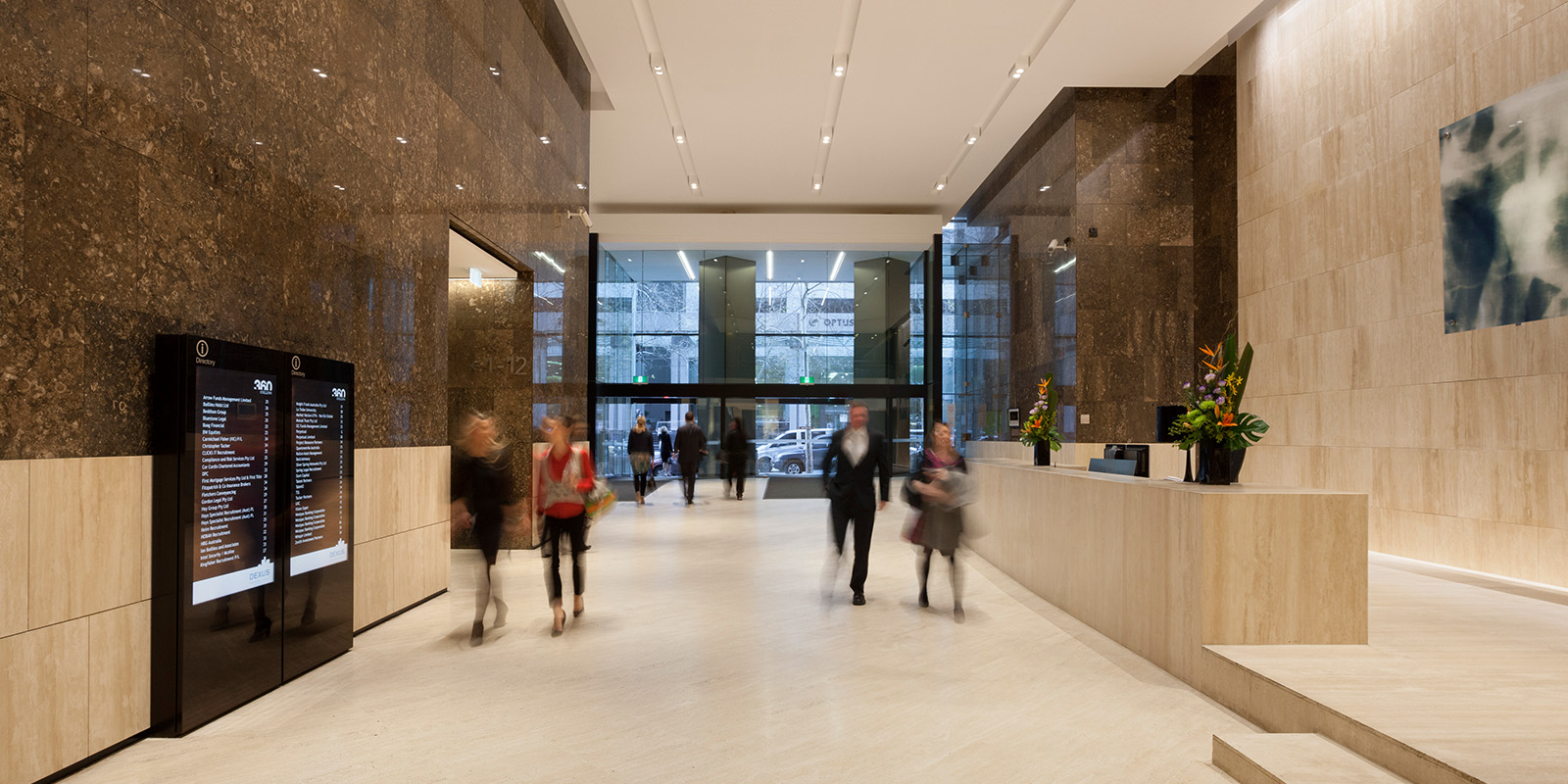
Similarly, Dexus 360 in Melbourne’s CBD called for restraint. Crafted with the 360 Collins brand team, the scent layers leather, sandalwood and lilac into something understated yet distinctive, reinforcing a sense of quiet sophistication for tenants and visitors entering one of the city’s most refined addresses.
At 25 Martin Place, Air Aroma supplies an ambient scent through arrival foyers and public thoroughfares that nods to the precinct’s Harry Seidler heritage and its contemporary reimagining by Woods Bagot, a fragrance designed to feel as considered as the architecture itself.
In the coworking and flexible workspace category, scent has become a particularly powerful tool for brand consistency across multiple sites. Hub Australia and Work Club both partnered with Air Aroma to create signature scents diffused nationally across their locations, ensuring members experience the same recognisable atmosphere whether they’re in Sydney, Melbourne or Brisbane. The Commons took a biophilic approach, with notes of fern, labdanum, galbanum, jasmine and mint designed to evoke calm and creativity across its community-focused spaces.
Hickory’s Market Lane development reimagined what an office of the future could feel like, translating that vision into an organic, lush fragrance of silver needle, sage, citrus and textured woods. And at 200 George Street, the scent was built to immerse visitors in the rich cultural history of the site, a complex blend of cedarwood, pink pepper and a touch of leather accord befitting one of Sydney CBD’s premium grade addresses.
At the development and portfolio level, scent strategy scales even further. Crown Group, one of Australia’s leading property firms, worked with Air Aroma on a signature scent designed to echo the iconic and innovative architecture across its luxury apartment and hotel developments. GURNER Group, known for ultra-luxury projects across the country, diffuses a signature scent of fresh green fig leaves, earthy carrot seed, cedar and sandalwood throughout the common areas of its exclusive developments, a fragrance built to feel as crafted as the buildings themselves.
Why This Matters for REITs Right Now
Australia’s commercial property sector is in a period of genuine recalibration. Hybrid work has changed what tenants expect from an office. Capital is being directed toward assets that can prove differentiation, not just location and grade. And ESG and wellbeing credentials, once a nice-to-have, are now scrutinised by tenants and investors alike.
In this environment, scent strategy offers something rare: a relatively low capital, high impact lever that touches brand, tenant experience and wellbeing all at once. It’s why precincts as varied as a net zero tower in North Sydney and a heritage gold-rush precinct in Melbourne have arrived at the same conclusion, that how a building smells is no longer incidental to how it performs.
For asset owners, developers and workplace operators evaluating where to invest next in tenant experience, signature scenting deserves a place on that list.
Partner With Air Aroma
Air Aroma has spent over two decades developing bespoke scent strategies for some of Australia’s most significant commercial, residential and workplace developments. From signature scent creation through to Ecoscent diffusion systems designed for large-scale common areas, lift lobbies and multi-site portfolios, our team works closely with developers, REITs and asset managers to translate brand identity into fragrance.
To discuss a signature scent strategy for your portfolio, get in touch with our team.
FAQs
Why are commercial property developers investing in scent strategy?
Scent creates an immediate, emotional first impression that reinforces a building’s architecture, brand and quality before a tenant or visitor has read any signage. For REITs managing multiple assets, a signature scent also builds a consistent, recognisable identity across an entire portfolio.
Where is signature scent typically diffused in commercial buildings?
Most developments diffuse scent through high-traffic arrival points, including main lobbies, lift landings and common thoroughfares, where first impressions are formed and where the impact is most consistently felt by tenants and visitors.
Can scent be developed to match a building’s brand or architecture?
Yes. A bespoke signature scent is typically composed in collaboration with a building or precinct’s brand and design team, drawing on architectural heritage, materiality or brand values to create a fragrance that feels intentional rather than generic.
Does scent strategy work for multi-site portfolios?
It’s particularly effective at portfolio scale. A consistent signature scent across multiple buildings or locations functions similarly to a logo or colour palette, helping tenants and visitors recognise a brand the moment they walk in, regardless of which site they’re at.
Can a building’s signature scent be extended beyond ambient diffusion?
Yes. Many developers extend their signature scent into branded products such as candles or room sprays, which are commonly used for tenant gifting, vision centre experiences or community building initiatives ahead of a building’s opening.